
Practical course on aesthetic medicine patients by Alpha Aesthetics Academy
A practical course on patients in aesthetic medicine represents one of the most important steps for doctors and dentists wishing to acquire real skills in non-surgical aesthetic treatments. Indeed, aesthetic medicine cannot be learned solely through theoretical lessons, demonstration videos, or passive observation. To work with greater confidence, it is essential to engage with real faces, different anatomies, various tissues, specific needs, and clinical situations that require evaluation, precision, and decision-making skills.
Alpha Aesthetics Academy, in Sofia, offers a training program designed for healthcare professionals who want to learn in a concrete way, with practice on real models, direct supervision from trainers, and constant attention to safety. The goal is not simply to perform a procedure, but to understand the reasoning that leads to the choice of a technique, the evaluation of the patient, the management of possible reactions, and the construction of a harmonious result.
In this article, we will look at why practice on patients is so important, what skills it allows you to develop, how a hands-on training path is conducted, which treatments can be included, and why it is fundamental to avoid any improvised approach to aesthetic medicine.
What is a practical course on patients in aesthetic medicine
A practical course on patients in aesthetic medicine is a training path in which the participant does not just listen to a lecture or observe a procedure, but has the opportunity to practice directly on real models, always under the supervision of expert trainers. This type of training is particularly important because it allows theoretical knowledge to be transformed into operational skills.
Aesthetic medicine requires a combination of study, manual dexterity, aesthetic sense, and clinical prudence. Every treatment must be preceded by an accurate evaluation: age, skin quality, facial structure, facial expressions, proportions, any asymmetries, patient expectations, and possible contraindications. Only after this analysis is it possible to define whether a treatment is indicated and which technique may be most suitable.
During a practical course, the professional learns to observe the patient comprehensively. It is not just about identifying a wrinkle, a loss of volume, or an area to be improved, but about understanding how every detail fits into the overall balance of the face. This approach helps to avoid standardized treatments and to develop a more responsible vision of aesthetic medicine.
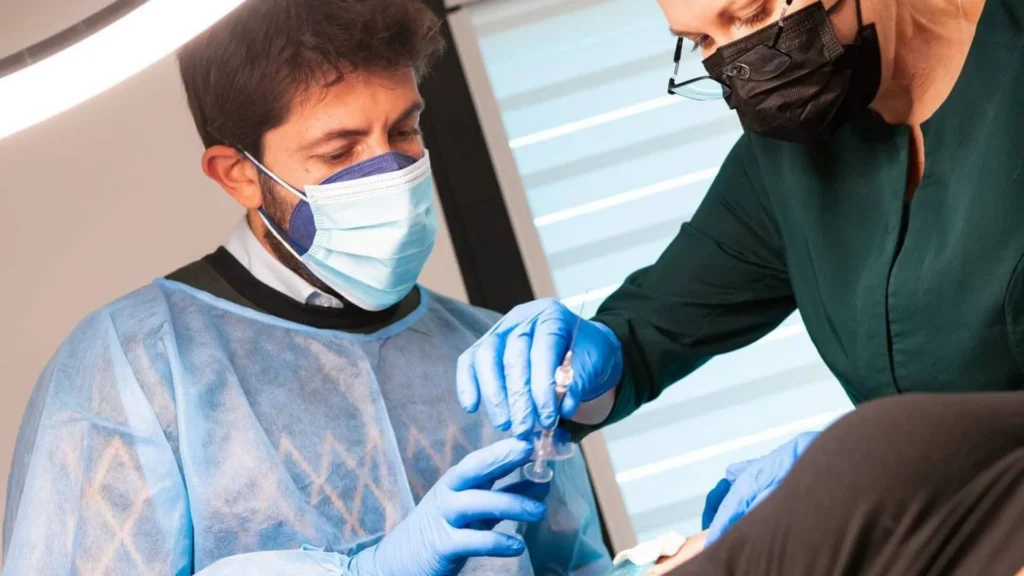
Alpha Aesthetics Academy structures its training with a strong focus on real practice. Participants work on models selected for training, receive guidance from trainers, and can engage with different cases. This allows them to understand how aesthetic medicine is a dynamic discipline, where the technique must always adapt to the person and not the other way around.
Why theory alone is not enough in aesthetic medicine
Theory is indispensable, but on its own, it is not sufficient to train a professional who is confident in aesthetic medicine treatments. Knowing the anatomy, protocols, and indications is the starting point, but true understanding comes when the professional engages with the real patient, their characteristics, reactions, and needs.
A face observed on a slide is different from a face evaluated in person. In person, one perceives tissue thickness, skin quality, muscle tone, dynamic proportions, and the way the patient smiles, speaks, frowns, or moves their lips. These are details that profoundly influence the choice of treatment and cannot be fully understood only through images or theoretical explanations.
Practice on patients also allows for the development of manual skills. The angle of the needle or cannula, depth, pressure, hand stability, the amount of product, and patient management during the procedure are aspects that require guided exercise. Without practice, the risk is knowing the technique in an abstract way but not knowing how to apply it with confidence.
A practical course on patients in aesthetic medicine must therefore integrate two dimensions: first, theoretical understanding, then controlled application. Theory explains the why of a procedure; practice teaches how to adapt it to the individual case.
Alpha Aesthetics Academy dedicates space to theory but especially values direct experience. Each training day is designed to link what is explained in the classroom with what is observed and applied on real models, in a guided and safe environment.
How practice on patients is conducted during the course
Practice on patients during an aesthetic medicine course must be organized in a precise, safe, and progressive manner. It is not about leaving the participant free to perform a procedure without guidance, but about accompanying them step by step through evaluation, planning, preparation, treatment, and analysis of the result.
The first phase is always observation. Before treating a patient or a real model, the professional must learn to read the face. Proportions, symmetries, skin quality, areas of volume loss, muscle strength, expressiveness, and realistic goals are evaluated. This phase is fundamental because a good procedure stems from a correct aesthetic diagnosis.
The second phase concerns the choice of technique. In aesthetic medicine, there is no single protocol valid for everyone. The same area can be treated in different ways depending on anatomy, age, request, and safety. During the course, the trainer guides the participant in choosing the most appropriate approach, explaining the clinical rationale behind every decision.
The third phase is practical execution. The participant works under supervision, receiving instructions on positioning, technique, the treatment plan, and patient management. This allows for the correction of any uncertainties in real time and transforms the experience into concrete learning.
Finally, the result is analyzed and any points of attention are discussed. This phase is valuable because it helps to understand not only what was done, but also how to improve. Alpha Aesthetics Academy values this method, offering a path where practice is not an isolated moment but a central part of the entire training process.
Which treatments can be learned with a practical course
A practical course on patients in aesthetic medicine can include various non-surgical treatments, always based on the participant’s level and the program structure. The goal should not be to accumulate techniques superficially, but to understand the indications, limits, and correct methods of execution for each procedure.
Among the most important treatments are mesotherapy, biorevitalization, skinboosters, botulinum toxin, and dermal fillers. Mesotherapy and biorevitalization are often used to work on skin quality, hydration, radiance, and tissue support. During training, the participant learns to evaluate the areas to be treated, the techniques with needle or cannula, and the protocols best suited to the patient’s profile.
Botulinum toxin requires precise knowledge of the mimetic musculature. It is not about eliminating every movement, but about modulating muscle activity in a balanced way that is consistent with the patient’s expressiveness. For this reason, practice on patients is fundamental: every face moves differently and requires personalized mapping.
Dermal fillers, on the other hand, are used to harmonize volumes, contours, and proportions. They can involve the lips, perioral region, cheekbones, chin, nasolabial folds, and other areas of the face. In this case, knowledge of anatomical planes and risk zones is essential for working with prudence.
Alpha Aesthetics Academy offers practical training that allows participants to engage with different treatments and various anatomies, always under supervision. This helps build a complete vision, avoiding the mistake of considering each procedure as an isolated technique.
Why facial anatomy is fundamental in practice on patients
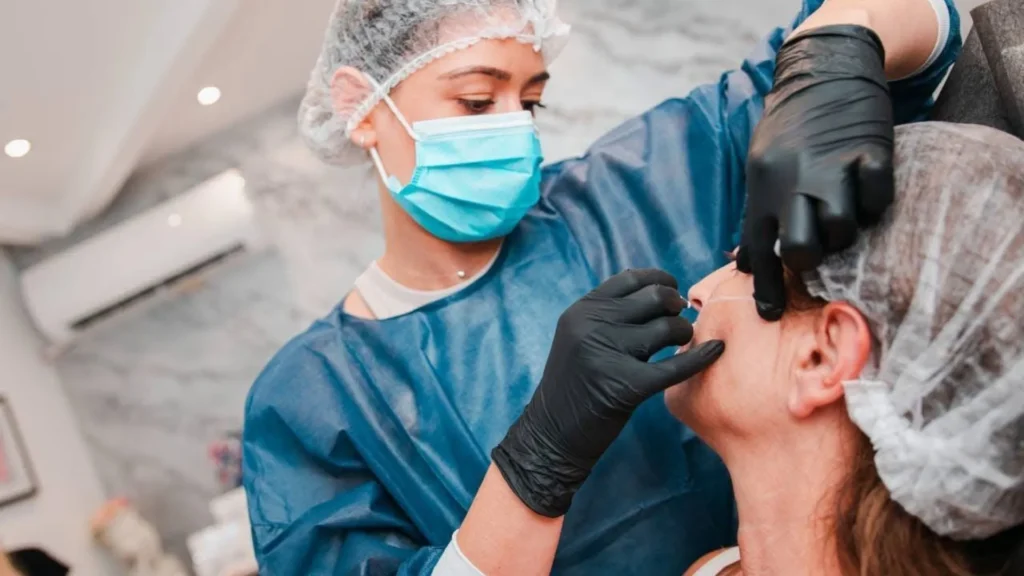
Anatomy is the basic language of aesthetic medicine. Without an in-depth knowledge of the face, practice on patients can become risky. Every injection, even when perceived as minimally invasive, involves specific anatomical structures: skin, muscles, vessels, nerves, fat compartments, ligaments, and deep planes.
During a practical course on patients in aesthetic medicine, the study of anatomy must not remain theoretical. The participant must learn to link what they have studied with what they see and touch during the evaluation of the real model. This step is decisive because every face presents individual characteristics and possible anatomical variations.
In treatment with botulinum toxin, for example, it is fundamental to understand the function of the mimetic muscles. The forehead, glabella, eye contour, smile, and lower third of the face require a dynamic evaluation. Treating without observing movement can lead to results that are not harmonious or consistent with the patient’s natural expressiveness.
In the case of fillers, anatomy guides the choice of the treatment plane and technique. The lips, cheekbones, chin, and nasolabial folds are different areas, with different risks and goals. A prepared professional must know where to intervene, where to avoid, how to distribute the product, and how to recognize any warning signs.
Alpha Aesthetics Academy integrates anatomy, practice, and supervision precisely to help participants develop a safer approach. The goal is not to learn rigid sequences, but to acquire the ability to reason on the real face.
What is the role of the trainer during practical training
The role of the trainer is central in a practical course on patients in aesthetic medicine. A good trainer does not just show a technique but accompanies the participant in understanding the case, choosing the protocol, and executing the procedure. Their presence allows every treatment to be transformed into a moment of guided learning.
During practice, the trainer observes how the participant evaluates the patient, prepares the area, holds the instruments, chooses the treatment plane, and manages communication. Small details can make a big difference: posture, hand stability, depth, angle, product quantity, and injection rhythm are aspects that are perfected with direct guidance.
An expert trainer also helps develop clinical reasoning. Before performing a treatment, it is important to ask why a certain technique is being chosen, what result is desired, what risks must be considered, and what alternatives might be more appropriate. This approach teaches the participant not to work automatically but to make motivated decisions.
Alpha Aesthetics Academy values constant supervision and personalized feedback. Small groups allow trainers to follow each participant closely, correct any errors, and answer questions. This is particularly important for those starting out, but also for those who already have experience and wish to improve their technique.
The presence of the trainer also offers a safer context for the real models and a more useful one for the participants. Practice is not improvisation, but controlled training.
Why avoid DIY methods and improvised training
In aesthetic medicine, there are no safe shortcuts. The spread of online content, demonstration videos, and information that is not always verified can give the illusion that fillers, botulinum toxin, or biorevitalization treatments are simple procedures to replicate. In reality, every treatment requires medical preparation, anatomical knowledge, and patient management skills.
A practical course on patients in aesthetic medicine serves precisely to avoid improvisation. The procedure is not just the moment of injection but includes anamnesis, evaluation, indications, contraindications, preparation of the environment, choice of product, technique, post-treatment, and management of any complications. Skipping even one of these phases can compromise safety.
DIY methods should always be discouraged. Uncontrolled products, instruments purchased independently, unsuitable environments, or techniques imitated without training can cause damage, infections, asymmetries, unwanted reactions, and even serious complications. Aesthetic medicine must remain a professional act, performed by trained personnel and in compliance with protocols.
Even for doctors and dentists, it is important to avoid courses that are too superficial or purely demonstrative if the goal is to acquire operational skills. Seeing a technique does not mean knowing how to perform it. For this reason, practice on patients, under supervision, represents an essential training step.
Alpha Aesthetics Academy promotes an approach based on safety, guided practice, and responsibility. The goal is not to provide quick formulas but to help the professional build real and applicable skills in their clinical activity.
How to choose a practical course on patients in aesthetic medicine
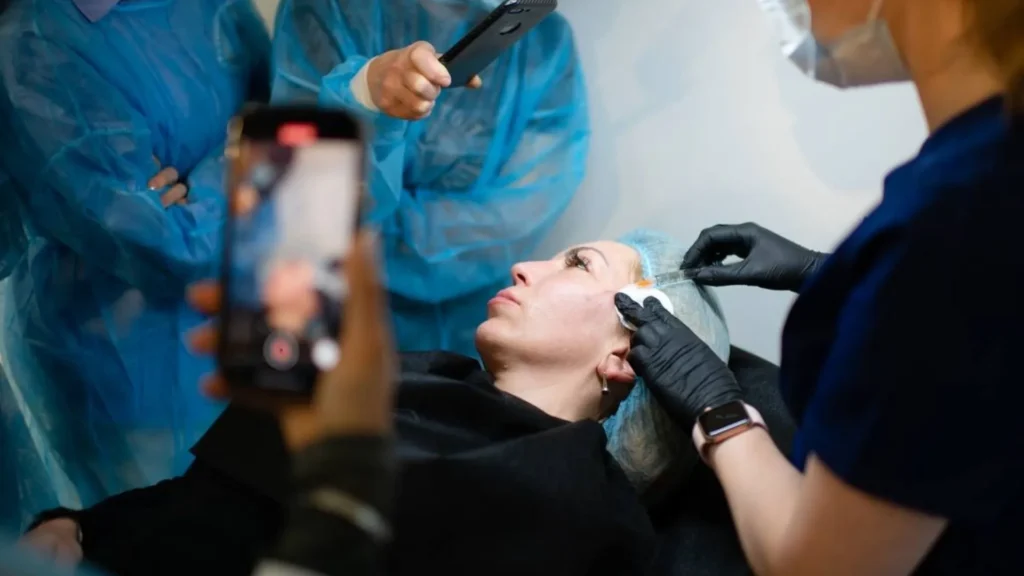
Choosing a practical course on patients in aesthetic medicine requires attention. Not all training paths offer the same level of depth, practice, and supervision. Before enrolling, a professional should evaluate some fundamental elements, avoiding basing their decision only on duration or the promise of learning many techniques in a short time.
The first criterion is the presence of real models. Practice on patients allows you to engage with different anatomies and concrete situations. A purely theoretical or purely demonstrative course can be useful as an introduction, but it does not offer the same experience as a path where the participant is guided in practical execution.
The second criterion is the number of participants. Groups that are too large can reduce the time dedicated to each person and limit the opportunities to ask questions, observe closely, and practice. Alpha Aesthetics Academy works with small groups precisely to ensure greater individual attention and more direct training.
The third criterion is the quality of the program. A complete course should include anatomy, patient evaluation, clinical protocols, practice, complication management, and case discussion. It is important that every technique is explained in its context, not as a sequence to be repeated without reasoning.
The fourth criterion concerns the trainers. Training must be guided by professionals with clinical experience and teaching ability, capable of explaining, correcting, and accompanying the participant through the process.
Finally, for Italian professionals, it can be useful to choose a course where linguistic understanding is facilitated. Alpha Aesthetics Academy offers courses in English with support in Italian, to make even technical content clearer.
Why choose Alpha Aesthetics Academy in Sofia
Alpha Aesthetics Academy, in Sofia, is a training institution dedicated to aesthetic medicine and designed for healthcare professionals who wish to learn through a practical, international, and safety-oriented approach. The path is built to combine theory, practice on real models, trainer supervision, and direct engagement.
One of the most important elements of the Academy is the focus on practice during the training path. Participants do not just assist but are involved in a hands-on experience that allows them to apply the knowledge acquired. This is particularly useful for those who want to transform training into concrete competence.
The Sofia location offers an international and organized context, with courses aimed at doctors and dentists who wish to approach aesthetic medicine or strengthen their path. The training is designed to accompany the participant gradually, starting from the basics and reaching practical application on various treatments.
The presence of trainers with experience in aesthetic medicine and training allows every topic to be addressed with a clinical and educational approach. The goal is not only to show a technique but to explain the reasoning behind it: why a point is chosen, what depth to use, which area to avoid, how to evaluate the patient, and how to manage post-treatment.
Alpha Aesthetics Academy also pays attention to the organization of the training experience, with small groups and support during the course. For Italian professionals, the possibility of having translation available in Italian represents an additional element of clarity.
Choosing a practical course on patients in aesthetic medicine at Alpha Aesthetics Academy means choosing concrete, guided training oriented toward professional growth.
Conclusion on the practical course on patients in aesthetic medicine
A practical course on patients in aesthetic medicine is an important choice for doctors and dentists who wish to train seriously in non-surgical aesthetic treatments. Aesthetic medicine requires study, precision, manual skills, and evaluation capabilities. For this reason, practice on real models, under supervision, represents a fundamental element of training.
In this article, we have seen why theory alone is not enough, how practice on patients is conducted, which treatments can be included, why anatomy is essential, and how important it is to avoid DIY methods or improvised paths. We have also explored the role of the trainer, the choice of the most suitable course, and the value of an organized training environment.
Alpha Aesthetics Academy, in Sofia, offers a path designed for healthcare professionals who want to learn with method, practice, and attention to safety. Training on real models allows for engagement with concrete cases, receiving feedback, and developing skills applicable in clinical practice.
For those wishing to start or consolidate their path in aesthetic medicine, choosing practical and guided training is the first step toward working with greater awareness. To receive more information on the practical course on patients in aesthetic medicine, you can contact Alpha Aesthetics Academy and evaluate the path best suited to your level.
📌 For info and bookings:
- 📲 WhatsApp: +39 3407118234
- 📞 Tel: +359 0895 65 1111 🇬🇧🇧🇬
- 📞 Tel: +39 340 711 8234 🇮🇹
- 📧 Email: alphaaestheticsacademy@gmail.com
- 📍 Han Presian 6, Sofia – Bulgaria