
Alpha Aesthetics Academy Filler and Botox Course
The filler and botox course is one of the most sought-after programs for doctors and dentists who wish to approach aesthetic medicine in a serious, practical, and informed manner. Dermal fillers and botulinum toxin are widely used treatments, but for this very reason they require rigorous preparation: it is not enough to know a technique, observe a demonstration, or replicate what is seen online. Solid anatomical foundations, facial assessment skills, knowledge of protocols, attention to safety, and guided practice on real models are essential.
Alpha Aesthetics Academy, in Sofia, offers training designed for healthcare professionals who want to develop concrete skills in facial injectable treatments. The program combines theory, hands-on practice, trainer supervision, and constant attention to complication prevention. The goal is to help each participant understand not only how to perform fillers and botulinum toxin, but above all when, why, and with what clinical limitations to propose them.
In this article, we will explore what is learned during a filler and botox course, who it is intended for, why hands-on practice is essential, what anatomical skills are required, how to recognize a quality training program, and why a cautious approach is crucial for working with greater safety in aesthetic medicine.
What is a filler and botox course
A filler and botox course is a training program dedicated to learning the main injectable treatments used in non-surgical aesthetic medicine. When referring to fillers, we are talking about products used to harmonize volumes, contours, and proportions of the face, always based on the clinical assessment of the patient. When referring to botox, a common term is often used to indicate treatments with botulinum toxin, employed in aesthetics to modulate the activity of certain mimic muscles and improve the expressive balance of the face.
These treatments may seem simple because they are well known to the public, but in practice they require preparation, precision, and responsibility. An injection is never just a technical gesture: it is the result of clinical reasoning that includes anatomy, indications, contraindications, proportions, patient expectations, and safety.
A serious course must therefore start from a fundamental question: what does a professional really need to know before starting to treat a face? The answer does not only concern manual skills. It is necessary to know the structure of tissues, injection planes, risk zones, the function of mimic muscles, possible post-treatment reactions, and protocols for intervening in case of complications.
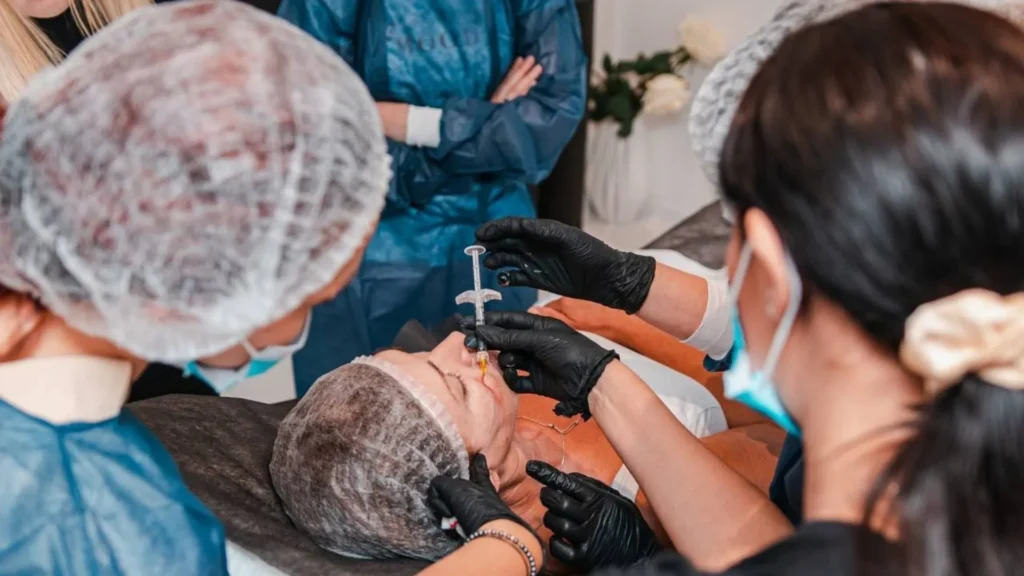
Alpha Aesthetics Academy offers a training approach that integrates theory and practice. During the program, participants explore dermal fillers, botulinum toxin, anatomy, patient assessment, safety, and practice on real models. This allows theoretical knowledge to be transformed into concrete experience, always under supervision.
A filler and botox course should never promote shortcuts, improvised techniques, or solutions learned without professional oversight. Aesthetic medicine is a medical discipline and, as such, requires study, ethics, and continuous updating.
Who the filler and botox course is for
The filler and botox course is intended for healthcare professionals who wish to train or refine their skills in injectable aesthetic medicine. In particular, it may be suitable for doctors, dentists, and professionals with adequate healthcare training who want to acquire a more complete, safe, and practice-oriented working methodology.
For a dentist, for example, the world of fillers and botulinum toxin can be particularly interesting because many assessments concern the lower third of the face, the lips, the perioral region, smile harmony, and the relationship between teeth, soft tissues, and facial proportions. However, knowing the oral area well does not mean being able to improvise aesthetic treatments. Each procedure requires specific training, because the techniques, materials, indications, and risks are different from traditional dental practice.
Even for a doctor approaching aesthetic medicine for the first time, a structured course represents an important step. The goal is not only to learn to “perform a treatment,” but to develop a clinical vision. This means being able to observe a face, recognize individual anatomical characteristics, understand the limitations of each procedure, and propose a realistic and safe plan.
The course can also be useful for those who already have experience and wish to consolidate their technique, update protocols, or improve safety in case management. Aesthetic medicine evolves rapidly and continuous training is essential for working with greater awareness.
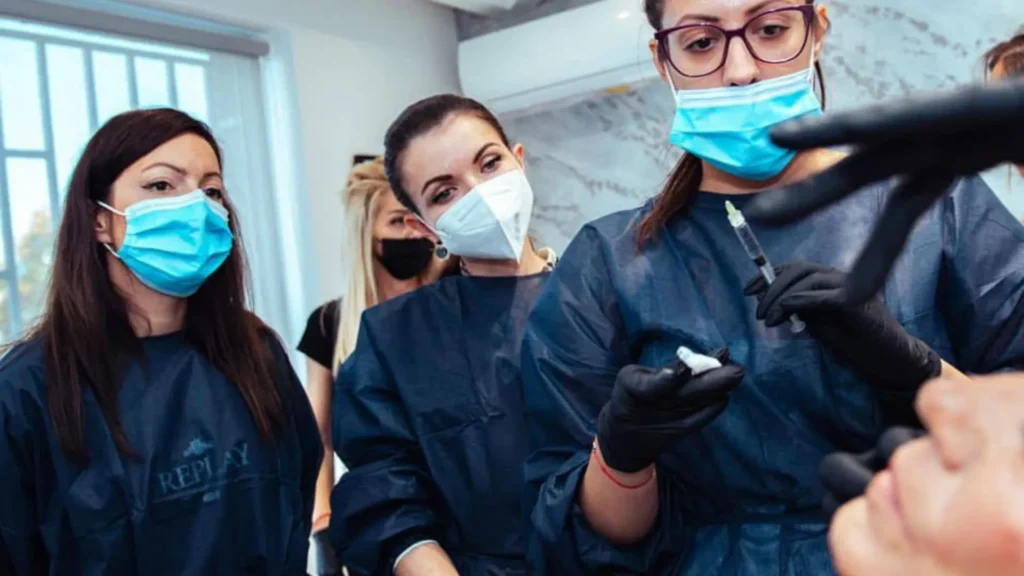
Alpha Aesthetics Academy works with small groups, designed to promote direct attention and guided practice. This aspect is particularly important for those who want to receive personalized feedback, ask questions, and correct any technical uncertainties during the program.
Why hands-on practice is essential in injectable treatments
Hands-on practice is one of the most important elements in a filler and botox course. Observing a treatment can be useful, but it is not enough to acquire real operational confidence. Manual skills develop only through guided exercise, interaction with real models, and supervision by experienced trainers.
Every face is different. Skin quality, tissue thickness, muscle strength, proportions, natural asymmetries, biological age, and patient expectations all vary. For this reason, there is no technique that is identically valid for everyone. During practice, the participant learns to assess the case, adapt the technical gesture, choose the correct plane, and understand how small details can modify the result and the safety of the procedure.
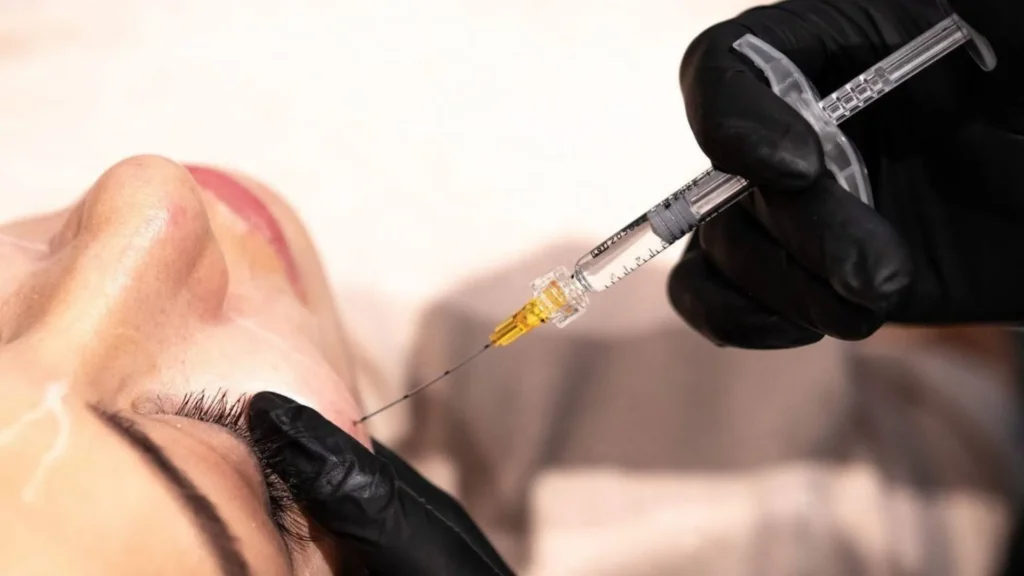
In the case of fillers, practice is essential to understand injection depth, product quantity, tissue distribution, the use of needle or cannula, and the management of more delicate areas. The lips, for example, require attention to morphology, symmetry, contour, projection, and naturalness. The treatment should never be standardized or aimed at creating the same result on every patient.
In the case of botulinum toxin, the participant must learn to observe facial expressions, assess muscle strength, correctly identify treatment points, and personalize the approach. A young face and a mature face may require different strategies, as may patients with stronger musculature, asymmetries, or particular expressive habits.
Alpha Aesthetics Academy dedicates significant time to practice on real models. Hands-on training allows participants to work in a controlled environment, with direct supervision and the opportunity to receive immediate corrections. This reduces the risk of learning automatic gestures and helps build a more conscious technique.
What anatomical skills are needed for fillers and botulinum toxin
Anatomy is the foundation of every filler and botox course. Without accurate knowledge of the face, it is not possible to work safely. Injectable aesthetic medicine involves delicate structures: muscles, vessels, nerves, adipose compartments, ligaments, superficial and deep tissues. Each area has specific characteristics and requires an appropriate approach.
For botulinum toxin, knowledge of mimic musculature is essential. The professional must know which muscles are involved in facial expressions, how they contract, what direction they have, and how they interact with each other. Treating a wrinkle without understanding the movement that generates it can lead to unnatural results or expressive imbalances. For this reason, dynamic facial assessment is an indispensable phase.
For dermal fillers, knowledge of anatomical planes and risk zones is even more relevant. Lips, nasolabial folds, cheekbones, chin, and jawline are areas that require precision and caution. The professional must understand where to place the product, what depth to use, which structures to avoid, and how to recognize any warning signs.
A good course must also teach how to read facial aging. Over time, the skin, bone support, adipose compartments, and tissue tone change. For this reason, a treatment on a young patient cannot be planned in the same way as a treatment on a mature patient. Responsible aesthetic medicine does not only correct a single detail, but assesses the face in its entirety.
Alpha Aesthetics Academy integrates the study of anatomy with practice, so that participants can connect what they learn in the classroom with what they observe on real models. This step is fundamental: anatomy must not remain a theoretical concept, but become a daily tool for assessment and safety.
What is learned during a lip filler course
Lip filler is one of the most requested treatments in aesthetic medicine, but also one of the most delicate from a technical and aesthetic point of view. For this reason, a filler and botox course should dedicate particular attention to the labial and perioral region, teaching not only injection techniques, but also morphological and functional assessment.
The lips should not be considered as an isolated element. The professional must observe the relationship with the smile, teeth, chin, nose, profile, and the entire face. A harmonious result does not depend only on volume, but on the proportion between upper and lower lip, contour definition, symmetry, tissue quality, and patient expressiveness.
During the training program, the participant can learn how to assess lip morphology, recognize different anatomies, identify risk zones, and choose the most suitable technique. In some cases, the goal may be a more precise definition of the contour; in others, slight tissue support; in still others, an improvement in hydration or profile balance. There is no single solution valid for everyone.
Training must also teach when to avoid a treatment or when to propose a more gradual approach. Some requests may be influenced by images seen on social media or aesthetic models not suited to the patient’s face. The professional has the duty to explain the limitations, guide toward a natural result, and discourage excesses or procedures not consistent with individual anatomy.
Alpha Aesthetics Academy dedicates attention to technique, safety, and complication management in lip treatment. This allows participants to understand how important it is to work with precision and aesthetic sense, without turning the procedure into a standardized gesture.
What is learned during a botulinum toxin course
Botulinum toxin is one of the most widely used treatments in aesthetic medicine to modulate the activity of certain mimic muscles. In a filler and botox course, this topic must be addressed with great attention, because the result depends on the correct assessment of movement, the choice of treatment points, and the personalization of the protocol.
During a comprehensive course, the participant should learn the pharmacology of botulinum toxin, its modes of action, aesthetic indications, contraindications, dilutions, dosage criteria, and possible post-treatment reactions. Theory is essential to understand that it is not simply about “relaxing a wrinkle,” but about intervening on the muscular balance of the face.
Dynamic assessment is an essential phase. The patient must be observed while frowning, smiling, raising the eyebrows, or activating the different mimic districts. Each person has different muscle strength and a different distribution of expressions. For this reason, a standardized treatment can be imprecise or unnatural.
A well-structured course must also teach caution. Botulinum toxin must be used with judgment, respecting the patient’s expressiveness and the overall harmony of the face. The goal should not be to block every movement, but to obtain a balanced, coherent, and natural result.
Alpha Aesthetics Academy addresses botulinum toxin with an approach based on anatomy, muscle mapping, safety protocols, and guided practice. Participants learn to observe, plan, and intervene with greater awareness, always under supervision.
In this case as well, it is essential to discourage any form of improvisation. Techniques learned from videos, non-professional indications, or treatments performed without preparation can expose the patient to avoidable risks. Proper training is the first safety tool.
How to choose a truly comprehensive filler and botox course
Choosing a filler and botox course requires attention. Aesthetic medicine is a field in which the quality of training can make a big difference, especially for those who wish to apply the techniques in their professional practice. Before enrolling, it is useful to evaluate some fundamental aspects.
The first element is the presence of a solid theoretical component. A course should not be limited to demonstrating a technique, but should explain anatomy, indications, contraindications, materials, protocols, safety, and complication management. Without this foundation, practice risks becoming imitation.
The second element is practice on real models. Hands-on training is one of the most important criteria, because it allows the participant to experiment in a guided manner and receive immediate feedback. It is also useful to evaluate the number of participants: small groups allow greater individual attention and more opportunities for interaction with trainers.
The third element is the competence of the training team. Trainers with clinical and teaching experience can help the participant not only to perform a procedure, but also to reason about the case. This means understanding why to choose a technique, when to modify it, and when instead to avoid the treatment.
The fourth element is the organization of the program. An effective course should be progressive, with topics ordered and connected to each other. For example, first the anatomical and theoretical foundations are built, then the techniques are addressed, and finally work is done on cases and the management of possible complications.
Alpha Aesthetics Academy offers a structured course with limited groups, hands-on practice, real models, trainer support, and attention to safety. The courses are held in English, with translation available in Italian, an important aspect for Italian professionals who want to understand each step with precision.
Why to avoid improvised methods and uncontrolled training
In the world of aesthetic medicine, access to videos, tutorials, and online content has made it seemingly easier to approach fillers and botulinum toxin. However, this ease can be dangerous if it leads to underestimating the complexity of injectable treatments. A serious filler and botox course must also teach what not to do: improvise, copy techniques without understanding them, rely on unverified indications, or treat without adequate preparation.
Every injectable procedure involves responsibility. The skin, vessels, muscles, and deep tissues are not the same in all patients. A technique seen on one face may not be suitable for another. Even the amount of product, the injection plane, and the choice of instruments must be determined based on the specific case, not according to generic schemes.
DIY is strongly discouraged, both for patients and for those who think they can learn medical procedures without an adequate program. Uncontrolled products, unsuitable instruments, non-sterile environments, and lack of anatomical knowledge can lead to even serious complications. Aesthetic medicine must remain a professional act, performed by trained personnel and in compliance with applicable regulations.
Even for healthcare professionals, training cannot be reduced to a sequence of technical steps. It is necessary to understand the clinical logic: why to treat an area, when not to treat it, how to prepare the patient, how to manage post-treatment, and how to intervene in case of adverse reactions.
Alpha Aesthetics Academy promotes a responsible approach, based on guided practice, safety, and continuous updating. The goal is not to transmit “tricks,” but to build real skills that can support the professional in daily practice.
The value of Alpha Aesthetics Academy for a filler and botox course in Sofia
Alpha Aesthetics Academy is located in Sofia, Bulgaria, and offers training programs in aesthetic medicine aimed at healthcare professionals who wish to learn in an international, practical, and structured context. The filler and botox course is part of a training offering focused on hands-on practice, safety, and the development of skills applicable in clinical practice.
The Academy was founded by Dr. Ivelina Dicheva, DMD, an international trainer and speaker, with experience in non-surgical aesthetic medicine and professional training. Her approach combines scientific precision, attention to facial harmony, and teaching ability. The training is designed to guide the participant step by step, from theoretical understanding to practice on real models.
One of the strengths of Alpha Aesthetics Academy is the small group size. This allows trainers to follow participants more closely, correct technique, answer questions, and offer personalized feedback. In a field such as aesthetic medicine, this aspect is particularly important because every detail can influence the safety and quality of the result.
The program dedicates attention to lip fillers, facial fillers, botulinum toxin, anatomy, patient assessment, treatment protocols, complication prevention and management. Practice on real models allows participants to deal with different cases and understand how to adapt the technique to individual anatomy.
For Italian professionals, the opportunity to attend a course in English with translation available in Italian can facilitate the understanding of more technical content. This is particularly useful when addressing complex topics such as dosages, dilutions, risk zones, and safety protocols.
Choosing Alpha Aesthetics Academy means choosing a training environment designed for those who want to learn with method, practice, and responsibility.
Conclusion on the filler and botox course
The filler and botox course represents an important step for doctors and dentists who wish to approach injectable aesthetic medicine or consolidate their skills. Dermal fillers and botulinum toxin are highly requested treatments, but they require knowledge, precision, and a sense of responsibility. They cannot be approached superficially, nor learned through improvised or uncontrolled methods.
In this article, we have seen that a comprehensive training program must include anatomy, facial assessment, clinical protocols, hands-on practice, complication management, and the ability to personalize each treatment. We have explored the importance of training on real models, the role of botulinum toxin, lip treatment with fillers, and the need to avoid standardized approaches.
Alpha Aesthetics Academy, in Sofia, offers a filler and botox course designed for healthcare professionals who want to learn in a guided environment, with small groups, experienced trainers, and attention to safety. Practical training, direct interaction, and supervision allow participants to develop concrete skills and greater clinical awareness.
For those who wish to begin or refine their journey in aesthetic medicine, choosing serious training is the first step. To receive more information about the filler and botox course and understand which program is most suitable for your level, you can contact Alpha Aesthetics Academy.
📌 For information and bookings:
- 📲 WhatsApp: +39 3407118234
- 📞 Tel: +359 0895 65 1111 🇬🇧🇧🇬
- 📞 Tel: +39 340 711 8234 🇮🇹
- 📧 Email: alphaaestheticsacademy@gmail.com
- 📍 Han Presian 6, Sofia – Bulgaria